




What Is Hojicha? Taste, Caffeine & Uses Explained

The Basics: What Is Hojicha?
If you've been exploring Japanese teas beyond matcha, you've likely come across hojicha — and if you haven't, it's worth your full attention. Hojicha (also spelled houjicha) is a Japanese green tea that has been roasted over charcoal or in a porcelain pot at high temperatures. That roasting process is what sets it entirely apart from every other Japanese green tea, including matcha.
While most Japanese green teas are defined by their steaming or shading methods — processes designed to preserve green color and fresh, grassy flavors — hojicha goes in the opposite direction. The roasting transforms the leaves from green to a rich reddish-brown, and the flavor shifts from fresh and vegetal to warm, toasty, nutty, and caramel-like. It's a fundamentally different sensory experience, and one that has earned hojicha a devoted following well beyond Japan.
Where Does Hojicha Come From?
Hojicha originated in Kyoto in the 1920s, when a tea merchant began roasting bancha (a common, coarser leaf tea) as a way to use leaves that were considered lower quality or unsellable in their unroasted state. What he discovered was that the roasting process didn't just salvage those leaves — it transformed them into something genuinely delicious.
The stems, stalks, and leaves used in hojicha are typically from later harvests, often the third or fourth flush of the season. These more mature leaves have less l-theanine and more tannins in their raw state, but roasting mellows the tannins and brings out a complex, caramelized sweetness. Today, premium hojicha is also made from first-flush leaves and high-quality stems specifically selected for roasting.
For powder applications — the form most relevant to cafés and food businesses — the roasted leaves are ground into a fine powder in the same way that matcha is produced. This hojicha powder wholesale is what you'll use for lattes, baked goods, desserts, and other applications.
What Does Hojicha Taste Like?
This is where hojicha wins over people who find matcha too intense. The flavor profile is warm, roasty, and smooth. Think toasted grain, light caramel, a hint of wood smoke, and a gentle sweetness — all without the grassiness or bitterness that some drinkers associate with green tea.
Hojicha is considerably lower in caffeine than matcha or most other teas, because the roasting process degrades caffeine content significantly. This makes it an excellent option for evening drinks, for customers who are caffeine-sensitive, and for children's menus or family-oriented café concepts.
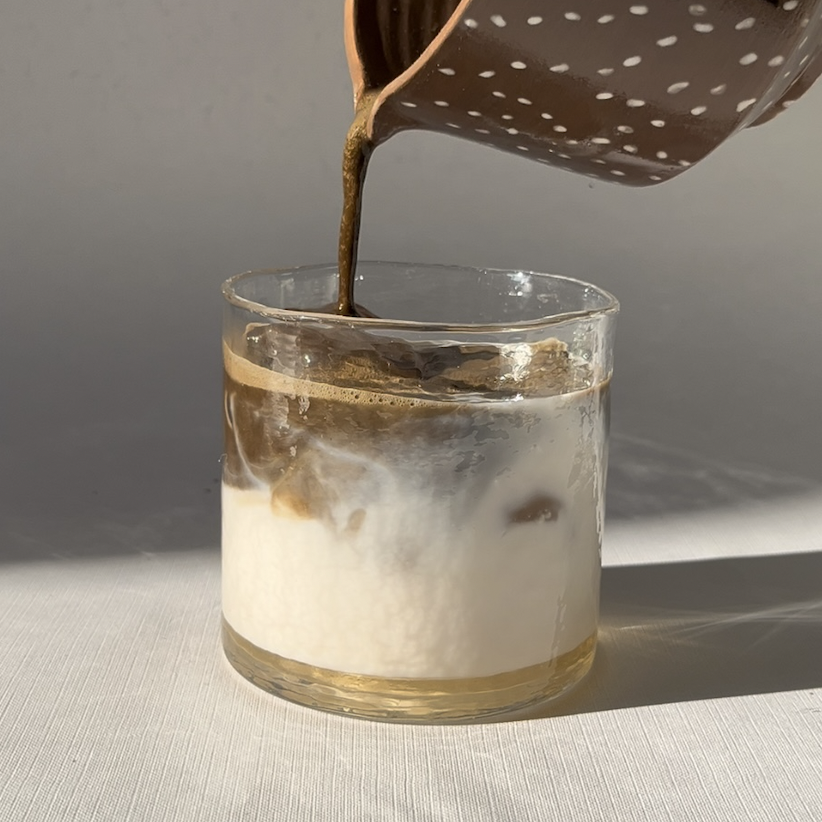
The roasted quality also means hojicha pairs extremely well with milk. A hojicha latte is warm, cozy, and deeply comforting — often compared to a hot chocolate in terms of its comfort-food appeal, but with a much cleaner, more sophisticated flavor profile.
Hojicha vs. Matcha: The Key Differences
Both hojicha powder and matcha are made from ground Japanese tea leaves, but they're very different products. Matcha is made from shade-grown, unroasted green tea leaves and has a fresh, grassy, umami flavor with a vibrant green color. Hojicha is made from roasted leaves and has a warm, toasty flavor and a brown color.
The caffeine levels differ significantly: matcha contains roughly 35mg of caffeine per gram, while hojicha powder contains much less, often around 7–10mg per gram. That's a meaningful difference for customers thinking about their daily caffeine intake.
Taste-wise, matcha tends to appeal to customers who enjoy bold, complex, slightly bitter flavors with depth. Hojicha appeals to those who prefer warmth, sweetness, and roasted notes. Many cafés find that stocking both gives them coverage across a wider range of customer preferences and daypart occasions.
Our matcha grades guide has more detail on how matcha grades work, if you want to go deeper on the matcha side of things.
How to Use Hojicha Powder in Your Café
The most popular application is the hojicha latte. Use 2–3 grams of hojicha powder, whisk with a small amount of hot water (70–80°C) into a smooth paste, then top with steamed milk. The higher temperature tolerance of hojicha means you can use slightly hotter water without affecting the flavor negatively.
Beyond lattes, hojicha powder opens up a wide range of menu options. Iced hojicha lattes are popular in summer months. Hojicha hot chocolate — made by whisking hojicha into a chocolate or cocoa base — is a genuinely compelling autumn drink. Hojicha is also brilliant in baking: hojicha cookies, hojicha buttercream frosting, hojicha cheesecake, and hojicha tiramisu all work beautifully because the roasty flavor plays well with sugar, butter, and chocolate.
For food manufacturers, Hojicha Japan Organic is a compelling ingredient option for granola, protein bars, ice cream flavors, and premium beverage RTD products. The flavor profile differentiates product lines without requiring the consumer education that matcha sometimes needs.
Sourcing Hojicha Powder for Your Business
Quality varies significantly between hojicha powders on the market. The key things to look for are: color consistency (a rich reddish-brown, not pale or khaki), aroma (strong roasted notes when you open the bag), flavor balance (warm and sweet, not bitter or stale), and particle size (fine enough to suspend smoothly in liquid without excessive clumping).
Organic certification matters to many café customers and food brands today. Sourcing from certified organic Japanese farms also ensures you're not introducing agri-chemical residues into your recipes — something increasingly important for premium menu positioning.
Request a hojicha sample from Pure Matcha Partners and experience the quality for yourself. We supply hojicha powder in wholesale quantities to cafés and food businesses across Europe, with consistent specification and competitive pricing on volume orders. Visit our full hojicha powder wholesale collection to see what's available.
We are available to give you the best advise on the best matcha for your company's industry
.avif)
.avif)
.avif)
.avif)



.png)
.avif)