




Usucha vs. Koicha


Usucha vs Koicha
For cafés, specialty retailers, and hospitality brands working with premium matcha, understanding the difference between usucha and koicha is useful. These two preparation styles aren’t just variations in strength but also represent distinct traditions, flavor experiences, and quality standards within Japanese tea culture.
What Is Usucha (Thin Matcha)?
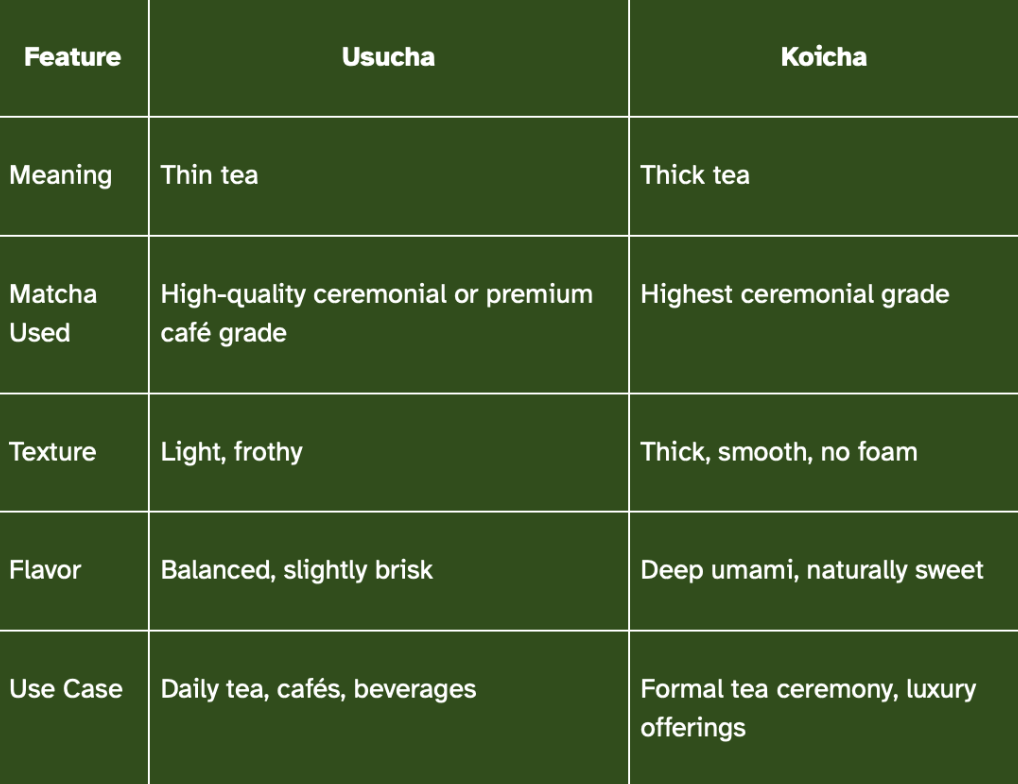
Usucha (薄茶) translates to “thin tea.” It is the most commonly prepared style of matcha and is characterized by a lighter body and a fine layer of foam on top.
Preparation Ratio
- 1 - 3 grams of matcha (depending on your preference)
- 60 - 80 ml hot water (around 75–80°C)
- Whisked with a bamboo whisk (chasen)
Commercial Applications
Usucha-grade matcha is ideal for:
- Traditional tea service
- Matcha lattes
- Signature café beverages
- Culinary and pastry applications
- Retail tins for everyday consumers
What Is Koicha (Thick Matcha)?
Koicha (濃茶) means “thick tea.” This is the most premium and traditional preparation style, reserved for high ceremonial settings.
Preparation Ratio
- 3.5 - 4 grams of matcha
- 30 - 40 ml hot water
- Kneaded slowly (not whisked to foam)
Texture & Flavor
- Thick, almost syrup-like texture
- Deep umami
- Natural sweetness
- Little to no bitterness when using ceremonial-grade matcha
Quality Requirements
Koicha can be prepared successfully with:
- First-harvest (ichibancha) leaves
- Carefully shaded tea plants
- Minimal astringency
- Ultra-fine milling
Key Differences at a Glance
Why This Matters for B2B Buyers
Understanding usucha vs koicha helps you:
1. Choose the Correct Grade for Your Market
If your customers are preparing matcha lattes, koicha-grade may be unnecessarily premium. If you're targeting luxury tea ceremony sets or connoisseur markets, koicha-level quality would suit better.
2. Optimize Cost Efficiency
Koicha requires significantly more powder per serving. For high-volume beverage programs, usucha-grade provides better margin control without compromising color and flavor.
3. Position Your Product Line Strategically
Many matcha brands choose to offer:
- A ceremonial grade suitable for koicha
- A premium everyday grade for usucha
- A culinary grade for food manufacturing
Education around these distinctions builds trust and supports their respective pricing.
How Japanese Tea Schools View the Difference
In traditional schools such as Urasenke and Omotesenke, koicha is considered the most formal preparation and is often shared among guests from a single bowl. Usucha is served individually and more frequently in everyday practice.
Sourcing the Right Matcha for Your Business
When selecting matcha for wholesale supply, consider:
- Harvest timing (first flush vs later harvests)
- Cultivar selection
- Shading duration
- Milling technique (stone-ground vs industrial)
- Intended preparation style
Contact us directly to find your most suitable grade, our team is happy to help you.
Final Thoughts
Usucha and koicha are not simply “light” and “strong” versions of the same drink. They represent different philosophies of preparation, quality thresholds, and market applications.
Understanding this distinction allows for smarter purchasing decisions, clearer customer education, and stronger premium positioning.
We are available to give you the best advise on the best matcha for your company's industry
.avif)
.avif)
.avif)
.avif)



.png)
.avif)