
Matcha vs. Coffee

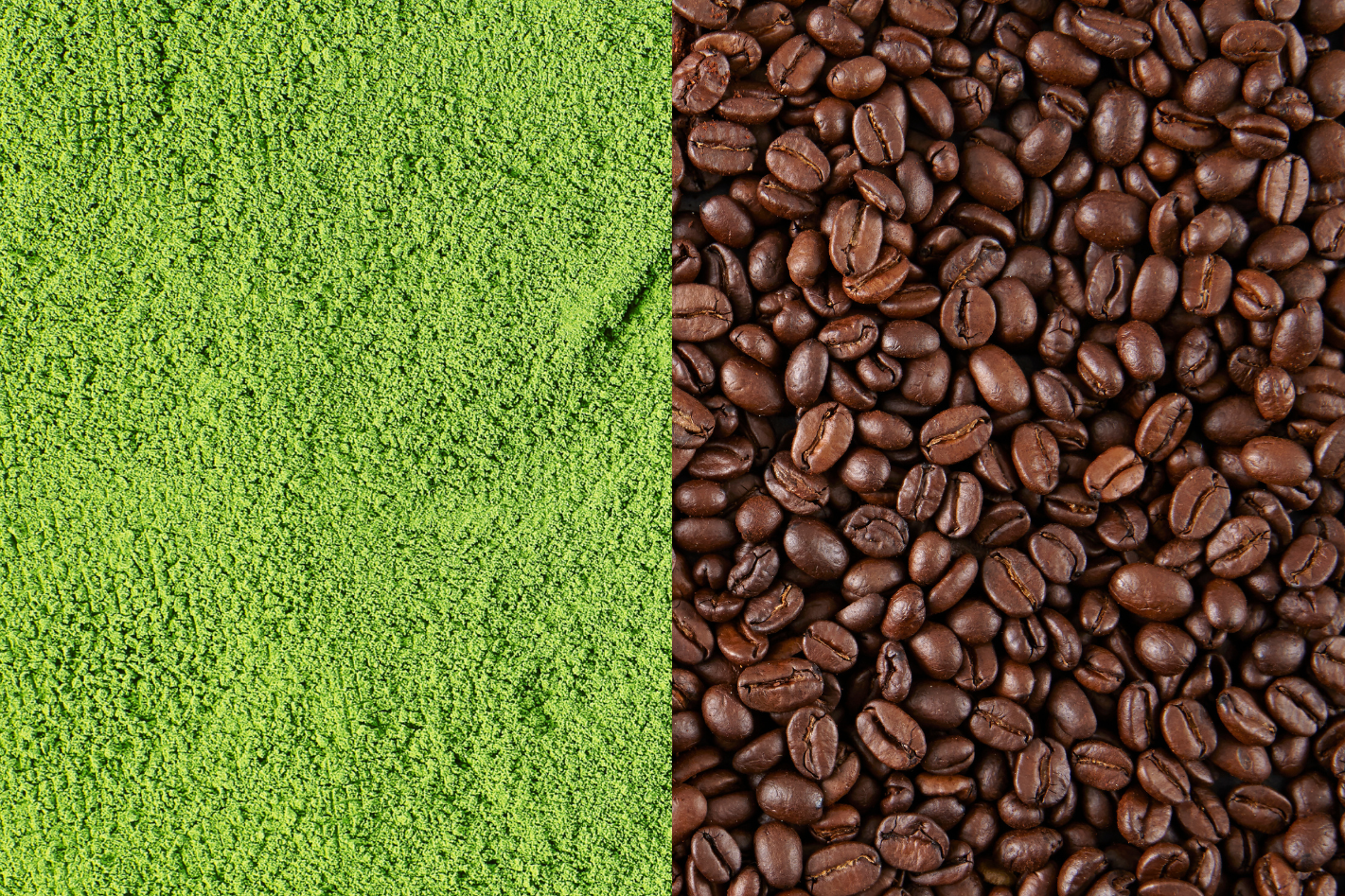
For many people, their day doesn’t officially start until caffeine kicks in. Coffee has long dominated the morning ritual, but matcha has been gaining serious popularity in recent years. Even from a personal recent experience at the airport where one barista told her colleague ‘Wow, we sold more matcha than coffee today’. However, beyond its aesthetics and cultural heritage, matcha offers a unique biochemical profile that sets it apart from coffee. Here’s a clear comparison of coffee vs. matcha, and why more people are switching to the latter.
Caffeine: Spikes vs. Smooth Energy
Both drinks contain caffeine, but the experience is completely different.
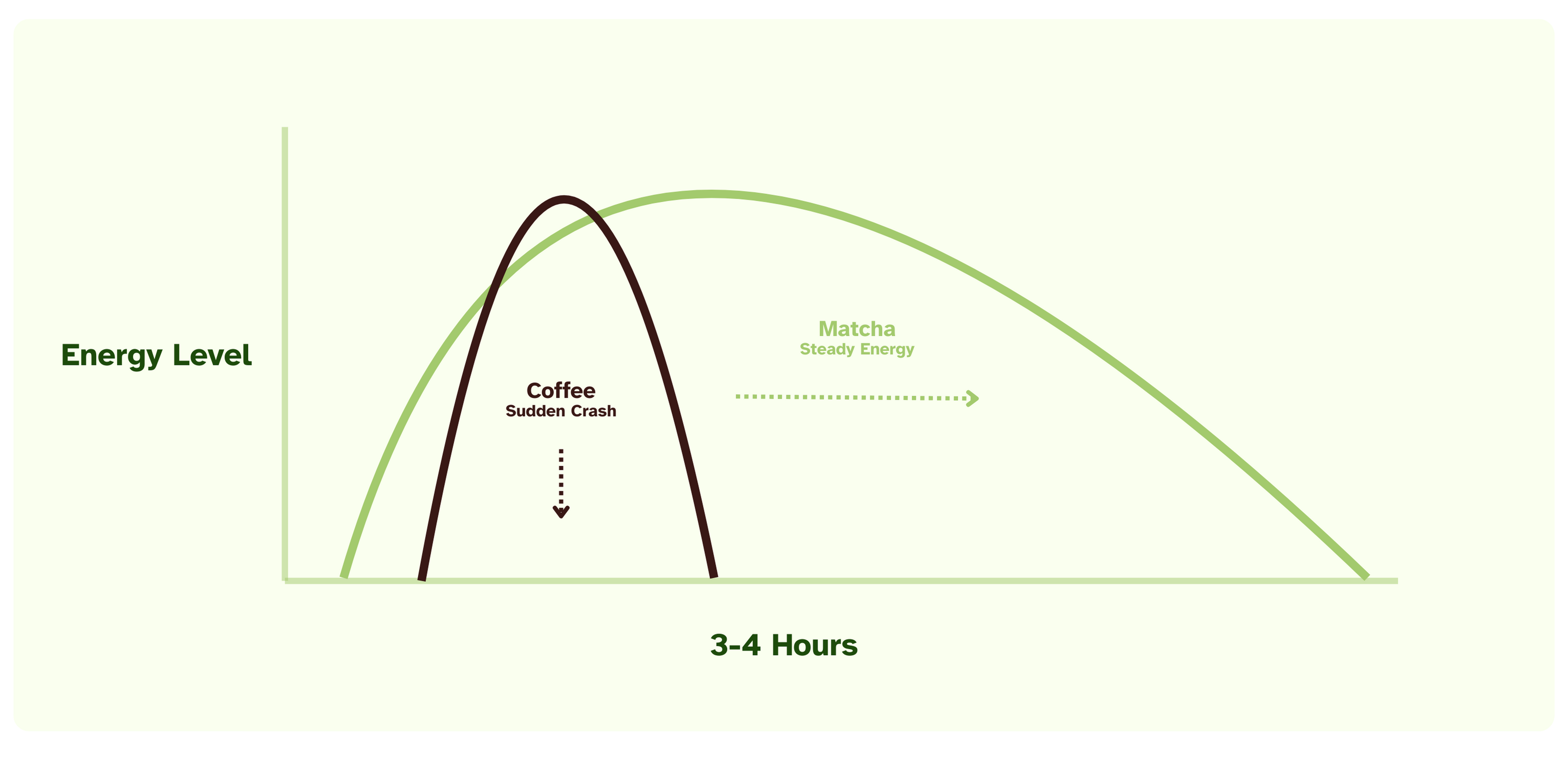
Coffee: Fast Absorption, Fast Crash
- Average cup: 95-120 mg caffeine
- Rapid absorption in the stomach and small intestine
- Strong peak in 30-45 minutes
- Common side effects: jitters, rapid heartbeat, post-peak “crash”
Because coffee’s caffeine is unbuffered, it binds quickly to adenosine receptors, giving sharp stimulation but also a sharp decline.
Matcha: Slow-Release Energy, No Crash
- 1–2g matcha: 65-80 mg caffeine
- Contains L-theanine, an amino acid that induces alpha-wave brain activity
- L-theanine moderates caffeine absorption, creating “relaxed alertness”
Clinical research shows that L-theanine + caffeine improves cognition, attention, and reaction time more consistently than caffeine alone. This is the foundation of matcha's famously stable energy curve.
Both beverages are antioxidant-rich, but their compounds differ.
Coffee
Coffee’s main antioxidant is chlorogenic acid (CGA), which may benefit:
- glucose metabolism
- inflammation reduction
- cardiovascular protection
While powerful, CGAs degrade with roasting and therefore darker roasts contain significantly less.
Matcha
Matcha is exceptionally rich in catechins, especially epigallocatechin gallate (EGCG), one of the most studied antioxidants in nutrition science. EGCG has been studied for its potential role in:
- supporting cardiovascular health
- aiding metabolic rate and fat oxidation
- countering oxidative stress
- potentially protecting neuronal function
Because matcha is consumed as a whole-leaf powder rather than an infusion, antioxidant intake is up to 10x higher than brewed green tea and significantly higher than most coffee servings.
Impact on Stress, Mood, and Mental Clarity
Coffee
Coffee triggers adrenaline release which is useful in moderation but potentially capable of:
- elevating cortisol
- increasing anxiety
- amplifying stress reactivity
This is why some people love coffee but it doesn’t always love them back.
Matcha
Matcha contains:
- L-theanine → reduces stress without sedation
- Gamma-aminobutyric acid (GABA) precursors → support calm focus
- Chlorophyll & micronutrients → gentle on digestion
Clinical studies show matcha consumption has been associated with improvements in working memory, attention, and stress response more effectively than other teas.
Gastrointestinal Effects
Coffee
Many coffee drinkers experience:
- acid reflux
- stomach irritation
- increased bowel motility
- nausea on an empty stomach
This is partly due to coffee’s acidity and chlorogenic acid breakdown products which stimulate gastric acid release.
Matcha
Matcha is:
- significantly less acidic
- easier on the stomach
- rich in compounds that support digestive health
Because matcha uses whole leaves, it also contributes small amounts of fiber, supporting gut function.
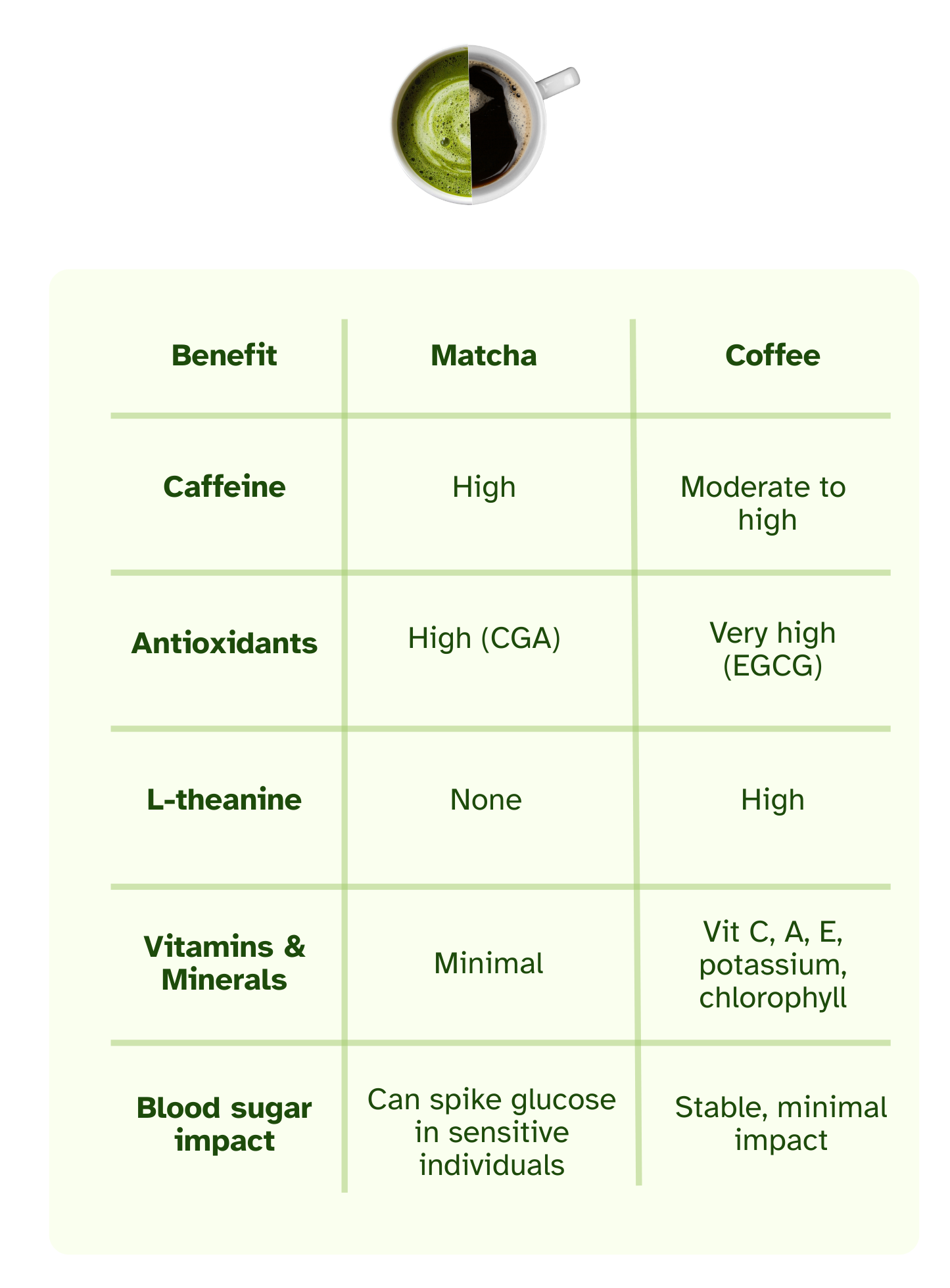
Nutritional Profile
Beyond biology, there’s also the matter of experience. Matcha preparation (whisking, measuring, breathing) is a mindful ritual. It encourages slow focus rather than the grab-and-go urgency often tied to coffee.
Matcha production, especially in regions such as Uji, Kagoshima, and Yame, typically involves:
- shade-growing to enhance amino acid
- straditional stone-milling
- artisanal cultivation practices
This keeps the tradition sustainable and quality-driven.
Final Verdict: Matcha Offers a Cleaner, Calmer Kind of Energy
Both drinks have benefits, but if your goals include:
- steady focusreduced stress
- fewer crashes
- better antioxidant intake
- gentler digestion
Many people prefer matcha for its steadier energy profile.
Coffee provides a fast surge, but matcha provides a longer-lasting, smoother, and more holistic boost backed by biochemical synergy between caffeine and L-theanine and its extraordinary antioxidant power.
Disclaimer
The information in this article is for general informational and educational purposes only. It is not intended to provide medical advice, diagnose health conditions, or serve as a substitute for professional healthcare guidance. While scientific concepts and research are discussed, they are presented in a general manner and should not be interpreted as claims of health benefits, disease prevention, or treatment outcomes.
Individual responses to foods and beverages such as coffee and matcha can vary widely. If you have specific questions about your health, nutrition, or caffeine intake, please consult a qualified healthcare professional. Always make dietary or lifestyle changes based on your own needs and circumstances.
We are available to give you the best advise on the best matcha for your company's industry
.png)
.png)
.png)
.png)




.png)
.png)
